Why improving social matching matters
After basic needs like health and shelter are taken care of, one of the biggest contributors to people’s increasing happiness becomes the quality of their social connections. Studies on self reported happiness have shown that those with an income of $50k per year with a partner have a self reported happiness as high as those making $110k per year. In purely economic terms, good matchmaking can give EACH person you match the equivalent of a new car in terms of happiness. What’s more, you don’t need a factory or materials to do it, just better algorithms!
We can give people significant amounts of new happiness at nearly zero cost!
We are currently at the start of a potential renaissance in social psychology. The tools we have now, Myers-Briggs, big five, are the ptolemaic models of the solar system. We are coming out of what will be looked back at as a dark ages where little real progress has been made on psychometrics. Many dating apps and HR departments now use those psychometrics to attempt to improve matchmaking, whether it be for romance or team composition. But if you think about them the way a machine learning engineer might think about the latent space of a VAE, their performance seems lackluster. Just as the latent of a VAE is meant to encode a compressed representation of the data it ingests, a psychometric profile like your big five scores is meant to encode a compressed representation of your personality, but how does it do on measures of quality of that compression? Both achieve what would be considered unpublishably weak predictions of life outcomes given that they are meant to represent the underlying traits (one’s personality and identity) that predict those same outcomes. This is what I mean when I say we are in a dark ages for psychology.
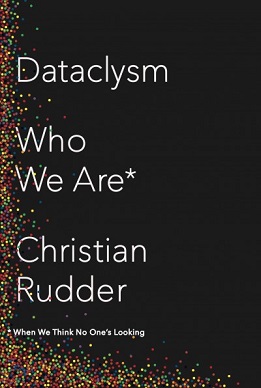
Like the work on astronomy being a precursor to the general Renaissance of thinking across Europe, the work by companies like Meta, ByteDance, and others has shown that we are in a new era in terms of our access to massive amounts of social data. Appropriately, the founder of OkCupid Christian Rudder wrote a book called Dataclysm predicting that there would be massive changes to psychology and matchmaking from this newly available data.
The work over the last 10 years in the interpretation of generative models has shown that we now have a path to quantifying the relationships underlying complex data about humans: our words, our movements, our speech, etc..
Whether it is work on interpreting the latent space of human faces to be able to understand how human attraction preferences may vary, or the work on interpreting the activations in language models as they encounter different personalities and emotions, we are now starting to have tools to quantify all the data human’s generate about themselves. That was the major bottleneck when Christian Rudder wrote Dataclysm, how to quantify the massive amounts of data we had about people, the signal that must be formed from the underlying traits of the people creating it.
Once we have better representations of people, then representations of their relationships to each other, and then learning the relationships between the input personality vectors (nodes) and the output relationship outcomes (edges) becomes the benchmark and research task, where those who work in ML research can begin to contribute to pushing forward the SOTA capabilities, for various social and dating apps to then use to distribute this social good to the whole of the human species.
One other question remains though, what is the need for this optimal social matching? My answer to this ends up being a point that some could contend with, and it is an open question, but here is how I think about social outcomes:
It seems a great tragedy to me, that many of us now live in mega-cities like NYC, in towering apartment complexes, where there are probably 50,000 people you could walk to meet in person in the next 15 minutes, and among that 50,000 is someone who could make your day, week, or life, significantly better, but because of a lack of search tools, you will never meet them.
Amplify this across the world, for any given person on earth you could name, you are probably only 1-12 hours from being able to call them on a video chat. Among that 6 billion internet users, there must be people who can truly transform your life, and yet again, because of a lack of search tools for the specific query of “mutual expected social value”, you will likely never talk to them. This fact makes me genuinely sad, that people will never meet their soul mates, that new ideas, companies, cultures, families may never form, that someone may live and die feeling much lonelier than they ought to.
It doesn’t have to be that way. The ability to find these connections is a technology that ought to exist in the world, and I would like to help bring together the people who can help solve it.
If you are interested in this work, please, schedule a call with me, and others listed on this website, we’d love to talk to you!
📞📅 Schedule a call